
Menhaden Fisheries Coalition Condemns Chesapeake Bay Foundation for Misusing Natural Fish Wash-Up to Push False Anti-Fishing Narrative
WASHINGTON, D.C. / ACCESS Newswire / March 6, 2026 / The Menhaden Fisheries Coalition strongly criticizes the Chesapeake Bay Foundation's Will Poston for exploiting the recent fish wash-up from Cape Henry, Virginia to Nags Head, North Carolina to promote yet another misleading attack on Virginia's menhaden fishery.
The Chesapeake Bay Foundation (CBF) is using this natural event to make false accusations and continue the campaign of anti-menhaden misinformation it has employed in numerous fundraising appeals, both online and in direct mail. It is another shameless attempt by CBF to make villains of the menhaden fishery, while failing to put the same focus on current environmental disasters, such as the vast amounts of raw sewage flowing into the Bay from the Potomac River. CBF's effort to use this beach wash-up to smear the menhaden fishery fits a broader pattern: blame menhaden harvest first, oversimplify the science second, and ignore every other environmental stressor that is harder to politicize.
Mr. Poston falsely stated that efforts to fund research to better understand the Chesapeake Bay menhaden population have "been needlessly delayed by Omega Protein and their McGuireWoods lobbyists in Richmond." There is no truth to that statement. Neither Omega Protein, nor Ocean Harvesters, nor McGuireWoods are standing in the way of any funding of a Bay survey.
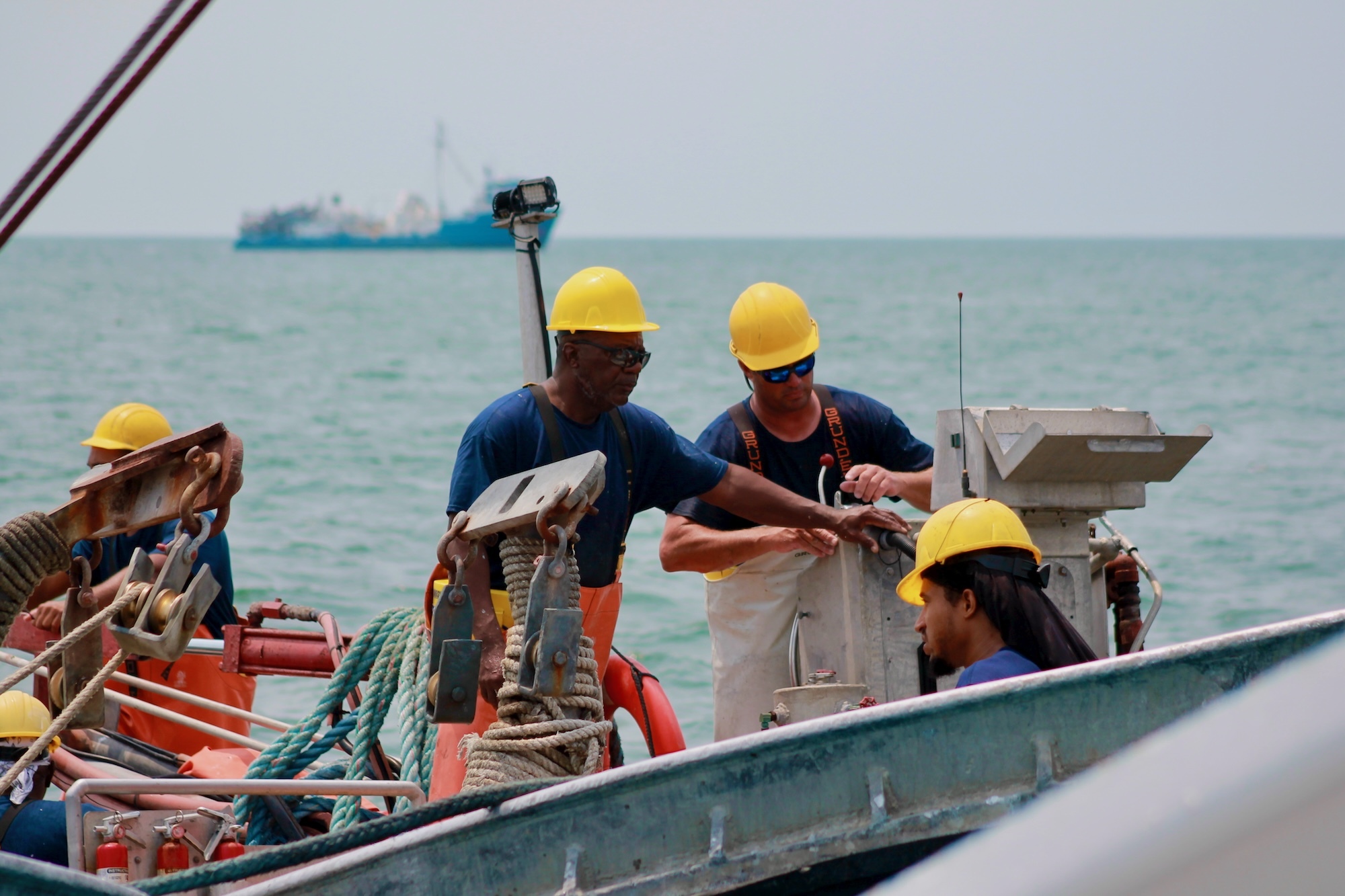
The industry supports science. Over the past two decades, Ocean Harvesters and Omega Protein have supported at least 15 scientific studies and have regularly provided detailed landings and operational data to NOAA and ASMFC scientists. The industry is currently working collaboratively with researchers day in and day out on menhaden tagging and other studies.
Through the Science Center for Marine Fisheries (SCEMFIS), a National Science Foundation (NSF) Industry-University Cooperative Research Center (IUCRC) that includes the Virginia Institute of Marine Science, the Marine Stewardship Council, and researchers from NASA, the industry has funded a project designed to identify the research needed to finally develop a scientifically defensible and ecologically meaningful Chesapeake Bay harvest cap for Atlantic menhaden. Led by scientists from the Chesapeake Biological Laboratory, the Virginia Institute of Marine Science, and NOAA, it will review existing menhaden science, identify key data gaps, and recommend specific study designs, analytical methods, timelines, and costs for future Bay-focused research, including tools such as tagging, hydroacoustics, spatial modeling, and analysis of existing datasets like landings and spotter pilot reports.
When CBF says research has been "needlessly delayed" by the industry, it is distorting the record. The real issue has been making sure research is done with credible methods and defensible study design, not blocking research.
The fish die-offs are unfortunate. But as reported by WTKR News 3, Virginia Marine Resources Commission public information officer Zach Widgeon stated this was "not a result of a fishing spill or a net bust." It was a natural cold-weather occurrence tied to a sudden temperature drop offshore.
The current die-off is not evidence of a collapsing forage base. It is evidence that menhaden remain abundant in Bay waters. As Mr. Widgeon noted, "There are so many menhaden out on the East Coast that you're going to see them affected and washing up more than any other species." CBF's statements continually ignore this most basic scientific reality: Atlantic menhaden are not overfished and overfishing is not occurring, according to the Atlantic States Marine Fisheries Commission's current benchmark assessment. ASMFC's management framework explicitly uses ecological reference points designed to account for menhaden's role as forage for predator species.
CBF also ignores recent state survey data. In October 2025, the Maryland Department of Natural Resources reported that Atlantic menhaden were widespread in the Chesapeake Bay for the third consecutive year.
These attacks are aimed at real people in a real working community. The Reedville-centered menhaden industry provides the kinds of jobs that rural Virginia cannot easily replace. A Virginia Marine Resources Commission economic assessment found that the direct effects of the operation are heavily concentrated in Northumberland County, with 217 of 299 employees residing there, including 55 in Reedville. The report also describes the jobs as stable employment with benefits and union representation, and notes that most direct impacts occur in Northumberland County.
CBF is not just criticizing a fishery. It is attacking one of the most economically important sources of unionized working-class employment in Virginia's Northern Neck, while presenting itself as the sole voice of the public interest. It is easy to issue inflammatory press releases, it's much harder to create well-paying jobs with full benefits.
Anyone who wants to understand what is really at stake should hear directly from the union fishermen themselves. Readers should visit the UFCW Local 400 website and watch this video featuring the union fishermen describing their jobs in their own words.
About the Menhaden Fisheries Coalition
The Menhaden Fisheries Coalition (MFC) is a collective of menhaden fishermen, related businesses, and supporting industries. Comprised of businesses along the Atlantic and Gulf coasts, the Menhaden Fisheries Coalition conducts media and public outreach on behalf of the menhaden industry to ensure that members of the public, media, and government are informed of important issues, events, and facts about the fishery.
Press Contact
Menhaden Fisheries Coalition
(202) 595-1212
www.menhaden.org
SOURCE: Menhaden Fisheries Coalition
Information contained on this page is provided by an independent third-party content provider. XPRMedia and this Site make no warranties or representations in connection therewith. If you are affiliated with this page and would like it removed please contact [email protected]
