Keeping a lawn looking its best in Dawsonville takes more than a weekly mow. In north Georgia, weeds tell their story below the soil. As a locally owned and operated weed control specialist company, we see these root patterns every week while providing lawn care in Dawsonville and surrounding areas like Cumming.
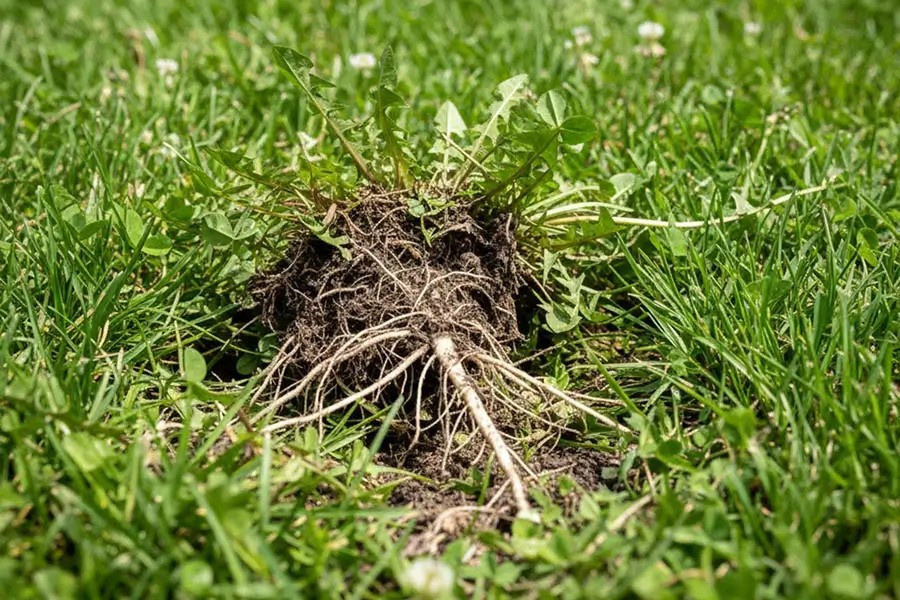
We recently inspected a lawn in Dawson County where the grass looked green on top, but the roots showed clear weed pressure. That is why checking roots matters for a healthier lawn.
Humid summers, mild winter weather, and clay soil bring unique challenges. When weeds take over underground, your grass struggles to stay strong. Let’s talk about what those root patterns mean and how professional lawn care services help with prevention and control.
What Do Shallow Roots Say About Weed Growth?
Shallow roots often point to active weed competition in a lawn.
Why shallow roots weaken grass
When weeds spread fast, they steal water and space. Grass roots stay close to the surface and dry out fast. This leads to thin spots and lawn disease.
Shallow grass roots show the lawn is stressed and not getting what it needs from fertilization and weed control.
Fast-spreading weed roots crowd out grass and block air movement in the soil.
We just treated a lawn care service in the Dawsonville area, where shallow roots caused brown patches even with regular watering.
How Do Thick, Tangled Roots Signal Weed Control Issues?
Dense root mats often belong to weeds, not healthy turf.
What tangled roots mean underground
Weeds like crabgrass and nutsedge form tight root webs. These choke out the grass roots and limit aeration.
Tangled root systems stop nutrients from reaching grass blades.
Crowded soil zones reduce results from overseeding and lawn fertilization.
Our technician sees this often during aeration jobs. Once we loosen the soil, weed control services work better, and the grass roots grow deeper.
Why Do Deep Taproots Point to Long-Term Weed Problems?
Some weeds grow deep and stay put for years.
The trouble with deep roots
Taproots dig down and pull nutrients meant for grass. Pulling weeds by hand often leaves part of the root behind.
Deep taproots mean weeds will return without proper treatment.
Old weed growth shows a need for a tailored treatment plan.
We just handled a professional lawn care visit where deep weed roots had been active year-long. A care program with regular maintenance fixed the issue.
What Does Patchy Root Growth Tell Us?
Uneven roots usually mean weeds are winning in certain areas.
How patches start
Weeds love weak spots caused by foot traffic, pests, or poor soil.
Bare soil pockets invite more weed growth.
Uneven grass roots lead to a lawn that looks rough and lowers curb appeal.
Our expert lawn care team often pairs weed control with shrub care and mulch to protect these spots.
How Do Pest and Weed Roots Work Together?
Pests and weeds often team up underground.
Root damage from pests
Grubs, fleas, and ticks harm roots, giving weeds space to grow.
Chewed roots weaken grass and invite fungal issues.
Loose soil areas increase weed spread and lawn disease.
That’s why our comprehensive services include pest control, mosquito control, fire ant control, and tick control for peace of mind.
Why Professional Lawn Care Matters in Dawsonville
Roots do not lie. Reading them takes local experts who know ga lawn care and grass type needs.
Professional services help keep your lawn strong through winter and summer.
Services tailored to your lawn’s specific needs protect trees and shrubs, too.
As an operated lawn care company with high standards, ALF Lawn & Pest Solutions offers expert lawn care and reliable lawn care across Dawsonville and surrounding areas.
Our lawn care experts handle fertilization, weed control, aeration, shrub care, and pest control services with a focus on a green lawn and beautiful lawn results.
Frequently Asked Questions About Weed Control
Can weed roots damage a healthy lawn?
Yes. Weed roots steal water and nutrients, which weakens the grass over time. This leads to thin spots and poor growth.
Do shallow roots mean I need weed control services?
Yes. Shallow roots often show weed pressure or poor soil health. Professional lawn care helps correct this with proper fertilization and weed control.
Will aeration help with weed root problems?
Yes. Aeration loosens soil and helps grass roots grow deeper. This supports better prevention and long-term weed control.
Want a Healthier Lawn with Strong Roots?
Roots tell the full story of your outdoor space. When weeds take over underground, grass cannot stay lush or green for long. A professional lawn care service catches these signs early and applies control services that work with the north Georgia soil and weather.
ALF Lawn & Pest Solutions is a lawn care company that offers expert lawn care, comprehensive lawn care, and professional lawn care services tailored to your lawn’s unique needs. From lawn and shrubs to lawn fertilization and weed control, our goal is a healthier lawn that looks great all year.
If you want your lawn to be healthy, looking great, and hassle-free, contact us today. Call or contact us at (844) 369-8873 and let our local experts build a treatment plan for your lawn needs.