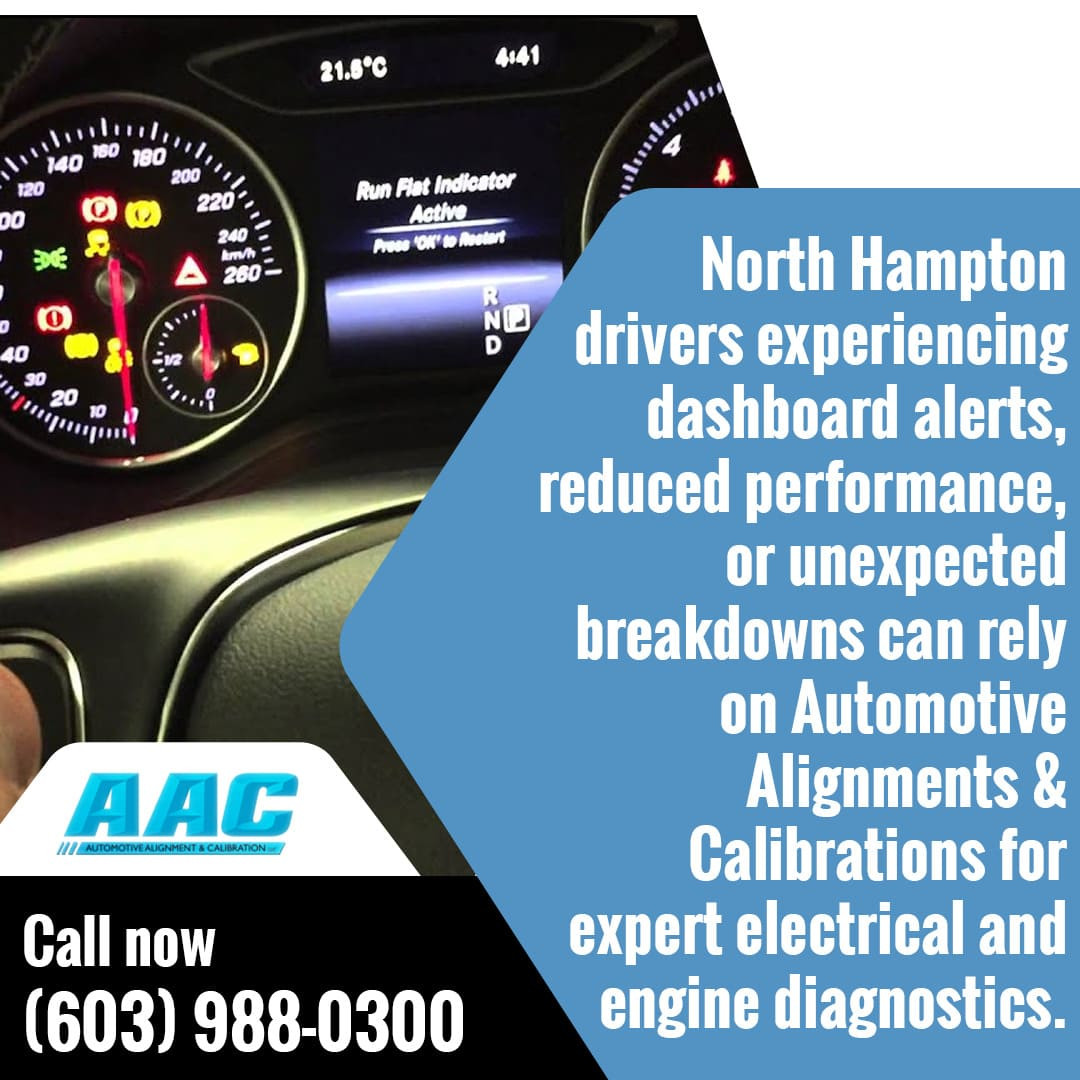
North Hampton, NH: Modern vehicles rely heavily on accurate electrical and engine systems to operate safely and smoothly. When these systems fail, drivers often experience reduced performance, unexpected breakdowns, or dashboard alerts. Automotive Alignments & Calibrations is helping local drivers understand how these issues are diagnosed and repaired by a trained auto mechanic and why choosing a skilled professional matters for long-term vehicle health.

Understanding Electrical System Diagnostics
A mechanical repair shop begins diagnosing electrical issues by inspecting the vehicle’s wiring, connectors, and power-related components. Technicians check the battery, starter, alternator, and sensors to locate faults that affect normal operation. Many common electrical issues stem from weak batteries, failing alternators, or sensors that send incorrect data to the vehicle’s control modules.
Technicians use multimeters to check voltage and resistance and OEM or professional scan tools to read diagnostic trouble codes and live sensor data, which helps identify hidden electrical faults across the vehicle’s electronic systems.
When repairs are needed, shops may install OEM parts when requested by the customer, specified by the manufacturer, or required under warranty. High-quality aftermarket parts are commonly used when OEM components are not available or when the customer prefers a cost-effective alternative. Discuss options with your technician and check your insurer and vehicle warranty for any specific requirements.
How Certified Auto Mechanics Identify Engine Problems
Engine diagnostics require a combination of visual inspection, performance testing, and specialized tools. Mechanics look for signs such as misfiring, overheating, leaks, or reduced fuel efficiency. Issues like worn ignition coils, damaged spark plugs, faulty injectors, or cooling system failures are common reasons engines lose performance.
Once the source of the problem is located, the faulty part is repaired or replaced. A trained ASE-certified mechanic in North Hampton, NH, ensures that every repair follows manufacturer standards and is tested thoroughly before the vehicle leaves the shop.
Interaction Between Electrical and Engine Systems
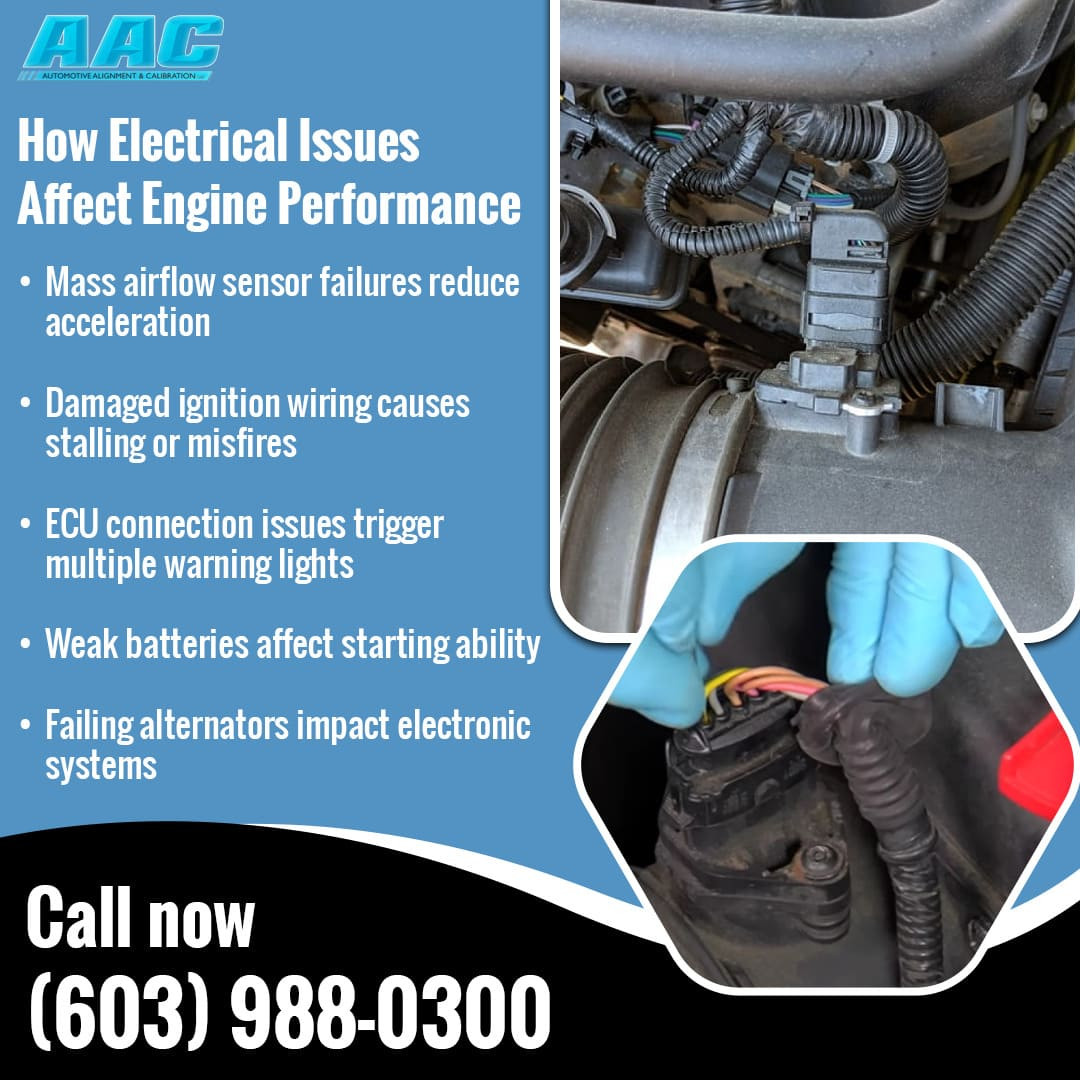
Electrical components control many engine functions, including ignition timing, fuel balance, and sensor communication. A problem with one electrical part can directly affect the engine. For example, a mass airflow sensor failure can reduce acceleration, while damaged ignition wiring can cause the engine to stall or misfire. ECU connection issues may trigger multiple warning lights.
By addressing both electrical and engine components together, repairs are more effective and prevent recurring issues.
Step-by-Step Repair Process
Initial Diagnosis
- Wiring, connectors, and sensors are inspected.
- Batteries and alternators are tested.
- Test drives are performed to observe the problem.
- Scan tools and multimeters are used to detect hidden faults.
Repair and Replacement
- Components such as wiring harnesses, connectors, ignition coils, injectors, and cooling system parts are repaired or replaced.
- OEM or high-quality aftermarket parts are used based on availability.
Verification and Testing
All repairs are tested to confirm that electrical, engine, and safety systems are functioning properly. This final step gives dependable performance.
Why Work With a Certified Auto Mechanic
Choosing a certified auto mechanic in North Hampton, NH can increase confidence in diagnostic accuracy and repair quality. Ask to see technician certifications, warranties for parts and labor, and documentation of completed tests.
These professionals complete formal training, stay updated on modern automotive technology, and follow recognized repair standards. This level of knowledge helps reduce misdiagnosis, avoid unnecessary repairs, and promote repair work that is completed accurately and with care.
Certified technicians offer benefits such as:
- Accurate diagnostics using approved methods
- Consistent repair quality backed by industry guidelines
- Ability to handle both routine maintenance and complex issues
- Knowledge of the latest tools, systems, and service techniques
Working with a qualified expert supports long-term vehicle performance, protects its value, and promotes a safer, more reliable driving experience.
Practical Tips for Vehicle Owners
Routine inspections and regular maintenance help prevent major failures. Drivers are encouraged to:
- Pay attention to warning lights and unusual sounds.
- Follow recommended service intervals.
- Discuss OEM and aftermarket part options with their technician.
- Report changes in performance promptly.
These steps allow small problems to be caught early, reducing repair costs and improving safety.

Schedule Your Service
Residents in North Hampton who notice performance changes or warning indicators are encouraged to schedule an inspection with Automotive Alignments & Calibrations, a trusted mechanical repair shop serving the local community. The team provides clear diagnostics, accurate repairs, and dependable customer support.
For service appointments, contact (603) 988-0300 or email [email protected].