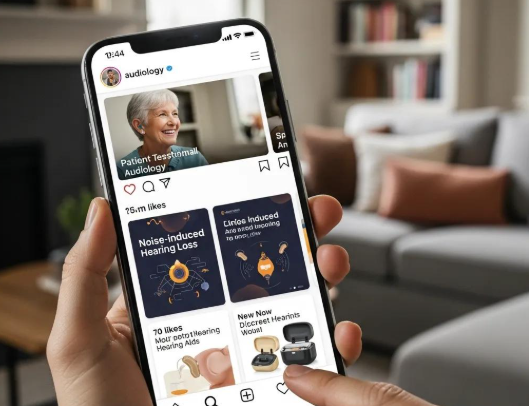
The modern patient journey for hearing care is no longer driven by referrals alone. Today’s patients—and their caregivers—begin their search online, comparing providers, reading reviews, watching videos, and evaluating trust signals long before they ever pick up the phone. As a result, audiology clinics must adopt a comprehensive digital marketing strategy that connects visibility, education, engagement, and retention into a cohesive growth engine.
This guide explains how digital marketing for audiology practices works, why specialized tactics are essential in hearing healthcare, and how clinics can prioritize the right channels to drive measurable patient acquisition and long-term retention. Readers will learn how core strategies—including SEO, paid advertising, local optimization, content marketing, automation, and conversion-focused website design—work together to generate booked appointments rather than just traffic.
Each section translates strategy into practical, clinic-ready steps and decision frameworks. After covering universal best practices, the guide briefly illustrates how a specialized provider like Audiology Ignite operationalizes these principles through a structured program and proprietary tools, enabling clinic leaders to compare in-market solutions without distraction from clinical priorities. The goal is to provide clarity, reduce guesswork, and support faster, more confident marketing decisions for sustainable clinic growth.
What Are the Key Audiology Marketing Strategies to Grow Your Hearing Clinic?
Successful audiology marketing combines discoverability, targeted outreach, patient education, and lifecycle automation to create consistent appointment flow and maximize patient lifetime value. No single tactic works in isolation. Instead, high-performing clinics rely on an integrated system where each channel plays a defined role in the patient journey.
Search engine optimization builds long-term visibility for high-intent queries. Paid advertising accelerates lead generation when demand needs to be captured immediately. Content and social media establish authority and trust, especially for patients who are uncertain or researching on behalf of loved ones. Retention and reactivation systems protect revenue by ensuring existing patients return for ongoing care.
When these elements operate together, clinics benefit from compounding returns. SEO reduces dependence on ads over time, paid campaigns provide data that informs content strategy, and automation ensures no patient relationship goes dormant. This omnichannel approach stabilizes patient flow and reduces risk tied to any single marketing channel.
A practical sequencing model begins with foundational visibility—technical SEO and Google Business Profile optimization—followed by targeted paid campaigns to generate immediate demand. As volume increases, content marketing and automation are layered in to improve conversion rates and patient retention, lowering cost per acquisition over time.
How Does SEO Improve Online Visibility for Audiology Practices?
SEO for audiology practices focuses on capturing patient intent at the exact moment individuals are searching for hearing-related services. This includes both direct service queries and educational searches that precede appointment decisions.
On-page optimization ensures that service pages clearly align with search intent for offerings such as hearing tests, hearing aid fittings, tinnitus treatment, and device repairs. These pages must articulate not only what the service is, but who it is for, what outcomes patients can expect, and why the clinic is qualified to deliver it. Clear structure, scannable headings, and patient-friendly language are critical.
Technical SEO supports this content by ensuring fast load times, mobile responsiveness, secure browsing, and clean site architecture. Structured data—such as Service, FAQ, and LocalBusiness schema—helps search engines and AI-driven search tools interpret clinic offerings accurately and display them prominently in results.
Content marketing strengthens SEO by building topical authority. Educational articles answering common patient questions about hearing loss symptoms, treatment options, device maintenance, and insurance considerations position the clinic as a trusted resource. This approach aligns with modern search behavior, where users often encounter AI summaries and featured results before clicking through.
SEO is a long-term investment, but it creates a sustainable foundation of high-intent traffic that compounds over time and reduces reliance on paid media.
What Role Do Paid Advertising and PPC Play in Audiology Marketing?
Paid advertising provides immediate visibility and predictable lead volume, making it a critical component of audiology marketing—especially for new clinics or those entering competitive markets.
Search-based PPC targets users actively seeking hearing services, allowing clinics to appear at the top of results for high-intent queries. Success depends on tight keyword targeting, ad copy that reflects patient concerns, and landing pages designed specifically for conversion rather than general information.
Social advertising plays a complementary role by reaching caregivers, adult children, and patients who may not yet be searching but are receptive to educational messaging. Retargeting campaigns keep the clinic visible to website visitors who did not book immediately, reinforcing trust and recall.
Effective PPC management requires clear conversion tracking. Clinics must measure not only clicks, but calls, form submissions, and scheduled appointments. Key performance indicators include cost per lead, cost per appointment, conversion rate, and downstream revenue.
When properly structured, paid advertising fills short-term demand gaps while supporting long-term SEO and content strategies through data-driven insights.
How Can Audiology Ignite’s Digital Dominance Marketing Program Transform Your Practice?
Audiology Ignite’s Digital Dominance Marketing Program illustrates how these strategies can be operationalized into a cohesive, clinic-specific growth system.
The program follows a three-stage framework. The foundation stage establishes technical SEO, conversion-focused web design, and accurate Google Business Profile optimization to capture local demand. The lead generation stage layers in paid search, social advertising, and content marketing to scale qualified traffic. The conversion and retention stage implements CRO and automated patient lifecycle tools to maximize revenue from both new and existing patients.
Each phase is tied to measurable KPIs, such as organic traffic growth, calls from local listings, cost per lead, and reactivation rates. This structure allows clinics to align marketing performance with business outcomes rather than vanity metrics.
Time to results varies by channel. Local optimization and paid ads can generate activity within weeks, while SEO authority and content-driven growth typically build over several months. The advantage of a structured program is clarity around expectations, sequencing, and return on investment.
How Do Proprietary Tools Like AuDMatic and CaptureHear Enhance Patient Retention?
Patient retention is one of the most underutilized growth levers in audiology. Tools like AuDMatic and CaptureHear automate communication and measurement across the patient lifecycle, transforming inactive records into ongoing revenue opportunities.
AuDMatic manages recall reminders, reactivation campaigns, and ongoing patient communication through segmented email and SMS workflows. Messages are triggered based on visit history, device age, and service type, ensuring relevance and timeliness.
CaptureHear enriches data and reporting, allowing clinics to track attribution, measure reactivation lift, and understand which campaigns drive booked appointments. Together, these tools provide visibility into performance while reducing manual workload for staff.
When implemented correctly, automation improves rebooking rates, increases patient lifetime value, and provides clearer insight into marketing ROI—all while maintaining compliance with data privacy standards.
Why Is Local SEO and Google Business Profile Optimization Crucial for Hearing Clinics?
Local SEO is one of the fastest and most impactful strategies for hearing clinics because most patients search for care near their location. Google Business Profile optimization directly influences whether a clinic appears in map results and local packs for hearing-related queries.
Accurate business information, correct service categories, consistent citations, and an active review strategy all contribute to local visibility. Regular posts, updated photos, and timely responses to reviews signal relevance and trust to both users and search algorithms.
Local SEO performance is measurable through actions such as click-to-call, direction requests, and appointment bookings. Clinics that prioritize these elements often see immediate increases in inbound calls without increasing ad spend.
How Does Social Media and Content Marketing Boost Patient Engagement?
Social media and content marketing build familiarity, trust, and education—especially for patients who may delay treatment due to uncertainty or stigma. Educational content helps normalize hearing care and positions the clinic as a helpful authority rather than a sales-driven provider.
Video content performs particularly well, allowing clinics to explain procedures, demonstrate devices, and share patient success stories in a relatable format. Blogs, guides, and checklists support SEO while providing assets for email campaigns and retargeting ads.
Consistency is key. A regular publishing cadence reinforces brand presence and keeps the clinic top of mind for both patients and caregivers.
What Are Effective Patient Retention and Reactivation Strategies?
Retention strategies focus on structured communication that encourages ongoing care. Automated recall reminders, device maintenance prompts, and personalized reactivation offers reduce missed appointments and bring lapsed patients back into care.
Email supports detailed education and scheduling information, while SMS delivers immediacy and convenience. Combined workflows often outperform single-channel outreach. Success is measured through open rates, booking conversions, and revenue generated from reactivated patients.
When executed thoughtfully, retention marketing delivers one of the highest returns on investment in audiology marketing.
How Does Responsive Website Design Improve Conversions?
A clinic’s website is the central conversion hub for all marketing efforts. Responsive, mobile-first design ensures that patients can easily find information and book appointments regardless of device.
Clear navigation, fast load times, visible trust signals, and prominent calls to action reduce friction and increase conversions. CRO techniques—such as A/B testing headlines, forms, and CTAs—allow clinics to improve results without increasing traffic.
A well-optimized website amplifies the effectiveness of SEO, paid ads, and local listings, creating a multiplier effect across channels.
Turning Strategy Into Sustainable Clinic Growth
Digital marketing for audiology is not about chasing trends or adopting disconnected tactics. It is about building a patient-focused system that attracts, converts, and retains individuals across the entire care journey.
By combining SEO, paid media, content, local optimization, automation, and conversion-focused design, clinics can create predictable growth while protecting staff time and clinical focus. Whether implemented internally or through a specialized partner, success depends on clear priorities, measurable KPIs, and consistent execution.
When strategy and operations align, digital marketing becomes not just a promotional tool—but a core driver of long-term clinic stability and growth.