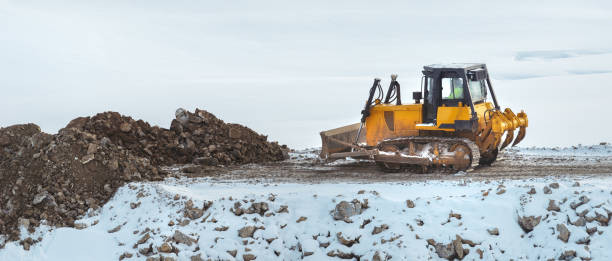
Timely winter grading means scheduling and executing grade control, drainage shaping, and subgrade preparation before or during winter conditions to protect structures and maintain site integrity. Acting at the right moment reduces the risk of frost heave, hydrostatic pressure, and winter erosion that can undermine foundations and delay construction. This article explains the key winter site-work challenges in Florence, SC, and presents practical mitigation techniques—ground thawing, soil stabilization, and drainage-first grading—that local contractors use to keep projects on schedule. You will learn how frozen ground changes excavation and compaction practices, what equipment and safety protocols matter in cold weather, and which drainage designs prevent winter water damage. The guide also covers gravel driveway installation and local cost considerations, plus specific frost-heave prevention steps for residential and commercial sites. Throughout, expect actionable lists, comparison tables of approaches and materials, and targeted recommendations for contractors and property owners planning winter site work in Florence, SC.
What Are the Key Challenges of Winter Site Work and Grading?
Winter site work in Florence, SC poses several predictable challenges that increase risk and cost for grading and site preparation projects. Frozen ground reduces compaction efficiency and makes trenching unpredictable, while increased surface moisture and freeze-thaw cycles drive erosion and settlement. Equipment performs differently in cold weather, requiring winterized attachments and revised safety protocols to keep crews productive and safe. The following list summarizes the most common winter grading obstacles and their operational impacts.
Frozen subgrade and slab formation create uneven compaction and later differential settlement.
Surface water and ice increase erosion risk and can overload temporary drainage outlets.
Reduced equipment uptime from cold starts, hydraulic viscosity issues, and attachment wear.
Crew safety and access complications raise labor costs and slow schedules.
These challenges point directly to mitigation methods such as targeted thawing, mechanical stabilization, and drainage-first grading—topics covered in the next section which outline practical techniques for winter site readiness.
How Does Frozen Ground Affect Site Preparation and Excavation?
Frozen ground increases excavation resistance, reduces the effectiveness of standard compaction methods, and can mask subsurface moisture that later causes settlement. When subgrade freezes, conventional rollers compact the surface without consolidating thaw-susceptible layers, producing uneven bearing capacity. Practitioners mitigate this by using ice rippers, staged thawing with heaters or blankets, and by replacing frost-affected material where necessary to establish a uniform base. Applying these measures restores workable conditions for stable subgrade formation and reduces later differential settlement.
What Equipment and Safety Measures Are Essential for Cold Weather Grading?
Equipment adaptations and safety planning keep crews productive during winter grading operations and limit delays from equipment failure. Essential items include ice rippers for breaking frozen layers, ground-thawing blankets or indirect heaters for controlled thawing, and winterized hydraulic fluids and batteries to maintain machine reliability. Safety measures—mandatory de-icing of access routes, crew rotation to limit exposure, and emergency response planning—preserve crew health and permit consistent progress. These operational steps lead naturally into specific grading techniques that improve winter site performance.
Which Winter Grading Techniques Ensure Effective Site Preparation in Florence, SC?
Effective winter grading relies on restoring a workable subgrade, stabilizing moisture-prone soils, and prioritizing drainage so water cannot pool and freeze. Ground thawing methods (blankets, indirect heaters) temporarily restore compaction ability, while mechanical recompaction and chemical stabilization (lime or cement) permanently improve load-bearing capacity. Drainage-first grading—crowning, positive slopes, and temporary channels—keeps meltwater away from footings and reduces freeze-thaw damage. Below is a compact comparison of common winter grading techniques and their typical use-cases.
• Ground thawing (blankets/heaters)
Best use: Creating short-term access for compaction.
Pros: Provides a quick work window.
Cons: Only temporary; requires fuel and adds cost.
• Mechanical stabilization (recompaction)
Best use: Reworking and compacting near-surface soils.
Pros: No chemicals needed; provides immediate compaction.
Cons: Not effective in saturated soils.
• Chemical stabilization (lime/cement)
Best use: Improving poor, clay-heavy soils that need added strength.
Pros: Delivers long-term soil strength.
Cons: Higher cost and requires specialized handling.
This shows how technique selection depends on soil type, project schedule, and desired permanence. For contractors and owners who prefer local execution, L H Stokes & Son, Inc. provides winter grading capabilities and on-the-ground experience implementing these techniques in Florence, SC; they offer free estimates to assess which approach fits each site.
How Do Ground Thawing and Soil Stabilization Improve Winter Grading?
Ground thawing restores the near-surface layer to a workable condition, enabling compaction equipment to achieve required densities and produce uniform bearing strength. Stabilization with lime or cement reduces moisture sensitivity and raises the soil's modulus, which prevents post-thaw rutting and settlement. In practice, combining targeted thawing with mechanical recompaction and selective chemical stabilization yields a durable subgrade that performs through freeze-thaw cycles. Contractors choose methods based on soil tests and project timelines to balance cost and longevity.
What Drainage Solutions Prevent Water Damage During Winter Site Work?
Designing positive drainage is the primary defense against winter water damage and subsequent frost heave. Techniques include crowning pavement sections, ensuring 2%+ slopes away from foundations, installing temporary diversion swales, and using erosion controls like silt fences and blankets where exposed soil is unavoidable. Proper outlet design—keeping discharge points clear and frost-resistant—reduces ice formation near structures. Implementing these drainage measures during grading minimizes standing water and protects both temporary and permanent site elements.
Crowning and slope grading
Directs surface water away from structures.
Installation complexity: Low.
Temporary diversion channels
Provides rapid runoff control during thaw.
Installation complexity: Medium.
Erosion control blankets or silt fences
Reduces sediment loss.
Installation complexity: Low to Medium.
These measures work together to protect sites through wet winter periods and prevent costly remediation later in the construction sequence.
How Does Timely Grading Protect Foundations and Prevent Soil Erosion in Winter?
Timely grading preserves foundation performance by directing water away from footings, reducing hydrostatic pressure, and limiting freeze-thaw exposure at critical interfaces. Proper grade profiles and temporary protections reduce the likelihood of frost heave adjacent to foundations and lower the risk of lateral soil movement on slopes. By stabilizing exposed soils quickly and establishing positive drainage before heavy precipitation or freeze events, property owners avoid expensive foundation repairs and schedule disruptions that occur when grading is delayed. The comparison table below summarizes common protection measures and their seasonal effectiveness.
Proper grading slope (away from the foundation) reduces hydrostatic pressure and provides high, year-round effectiveness.
Temporary berms or diversions offer immediate runoff control and are highly effective during storms or thaw periods.
Erosion control blankets help limit soil loss until vegetation establishes and provide medium effectiveness through thaw seasons.
Applying these protections early in the season reduces sediment transport and preserves structural clearances. Proper grading also complements long-term erosion control and foundation safety strategies for winter construction.
Why Is Foundation Protection Critical During Winter Construction?
Winter moisture and freeze-thaw cycles increase hydrostatic loads and the potential for frost heave that can displace footings and lower wall bearing capacity. Maintaining a positive grade away from structures prevents repeated wetting at the foundation edge, which magnifies freeze-thaw damage over time. Early grading that secures finished slopes, proper clearances, and temporary runoff controls reduces long-term structural risk and keeps construction timelines intact. This leads to fewer costly repairs and a more predictable build schedule.
How Does Proper Grading Mitigate Soil Erosion in Freezing Conditions?
Proper grading reduces erosion by minimizing exposed soil, directing meltwater into controlled outlets, and using temporary stabilizers until vegetation or permanent surfaces are established. During freeze-thaw cycles, unprotected slopes shed sediment rapidly; silt fences and erosion blankets trap particles and slow flow velocity. Monitoring and maintaining these controls through thaw periods prevents downstream sedimentation and protects adjacent properties and waterways from winter runoff impacts.
What Should You Know About Gravel Driveway Installation and Costs in Winter?
Installing or repairing a gravel driveway in winter requires careful base preparation, attention to drainage, and selecting aggregate that resists frost heave. Costs vary with scope—excavation, base depth, and material choice—but winter work often carries premium scheduling or specialized thawing and stabilization charges. Typical material options and their winter performance are compared below to guide choices for Florence, SC projects.
Crusher run
Drainage: Good
Performance: Compacts well as a base and resists movement during freeze–thaw cycles.
Washed stone (¾")
Drainage: Excellent
Performance: Drains very well and provides good surface stability when edged.
Pea gravel
Drainage: Fair
Performance: Poor compaction and tends to migrate.
For homeowners and contractors seeking installation or winter repair, L H Stokes & Son, Inc. offers gravel driveway installation services, material delivery (sand, gravel, topsoil, river rock), and equipment rental with operators. They can evaluate site-specific cost factors and provide a free estimate tailored to winter grading needs and material selections.
Which Gravel Types Are Best for Winter Driveways in Florence, SC?
A layered approach—crusher run for the base and larger washed stone for the surface—yields the best winter performance by balancing compaction and drainage. Crusher run compacts into a stable base that resists rutting, while larger washed stone on top sheds water and reduces frost-susceptible fines near the surface. Edge restraints and proper crowning enhance durability. Choosing locally available aggregates reduces hauling costs and improves installation speed during narrow winter windows.
How Can You Prevent Frost Heave and Driveway Damage in Winter?
Preventing frost heave starts with a proper base depth, mechanical compaction to specified density, and attention to drainage that prevents water infiltration under the surface layer. Additional measures include installing a geotextile separator over soft subgrade, ensuring a crowned profile for runoff, and using edge restraints to limit lateral movement of gravels. Regular monitoring during thaw cycles and timely spot repairs stop minor issues from becoming major repairs.